Business
Pearl District Founder Turns Vacant Warehouse Into Portland's Hottest Manufacturing Hub
Tanya Osei's Ironside Collective is pulling 200 jobs into Northwest Portland and rewriting what small-batch manufacturing looks like in 2026.
4 min read
Business
Tanya Osei's Ironside Collective is pulling 200 jobs into Northwest Portland and rewriting what small-batch manufacturing looks like in 2026.
4 min read
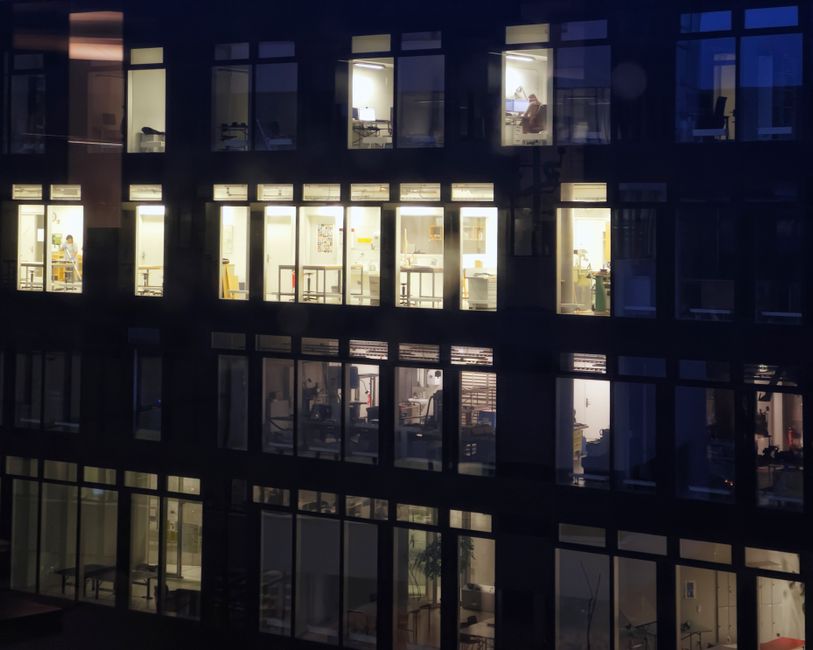
Tanya Osei signed the lease on a 42,000-square-foot former cold-storage facility on NW Naito Parkway in January, and by the Fourth of July weekend she has 34 tenant businesses operating inside it. Ironside Collective, the shared manufacturing and light-industrial campus she launched with $3.1 million in seed capital, is already at 80 percent occupancy — six months ahead of her own projections.
The timing matters. Portland's commercial property market has spent the better part of three years digesting pandemic-era vacancies, and the Pearl District and adjacent Northwest Industrial Triangle still carry an office vacancy rate hovering around 19 percent, according to second-quarter figures from Norris, Beggs & Simpson, the Portland commercial brokerage. Osei's bet — that converting underused square footage to hands-on production space serves a gap the market isn't filling — is paying off precisely when the city needs proof of concept.
Ironside's tenant list reads like a cross-section of Portland's maker economy. Albina-based ceramics label Kiln & Co. relocated its production operation from a cramped unit on NE Alberta Street to a 1,800-square-foot bay at Ironside in March, cutting its per-square-foot cost from $28 to $19 a month. A small-batch textile printer, a specialty coffee roaster sourcing directly from Ethiopian cooperatives, and a medical-device prototyping firm rounding out the mix. The campus includes shared CNC machinery, a loading dock rated for 40,000-pound capacity, and a fiber-optic connection Osei negotiated directly with Ziply Fiber — a detail that mattered to the three tech-adjacent fabrication startups that moved in during May and June.
Osei spent eight years as a supply-chain manager at Nike's Beaverton headquarters before quitting in 2023 to research the model. She visited similar hubs in Detroit's Eastern Market district and in Brooklyn's Industry City before deciding Portland's zoning quirks and cheap industrial power rates — Portland General Electric's small-commercial rate sits at roughly 9.2 cents per kilowatt-hour, well below the national average of 12.5 cents — made the numbers work here when they wouldn't elsewhere.
The campus has created or retained an estimated 200 jobs so far, with Osei projecting 310 by the end of 2026. That figure is notable because Multnomah County's broader job-creation numbers have been uneven: the Oregon Employment Department reported the Portland metro added just 4,100 private-sector positions in the first quarter of 2026, a slower pace than the 6,800 added in Q1 2025. Manufacturing and production roles, specifically, grew by only 0.4 percent year-over-year in the metro area.
The Ironside experiment is drawing attention from Prosper Portland, the city's economic development agency, which has flagged the campus as a potential template for the Central Eastside Industrial District, where several large parcels on SE Water Avenue remain underutilized. Agency staff have met with Osei twice this spring, though no formal partnership or city funding has been announced.
Portland State University's School of Business is tracking the project through its Oregon Small Business Development Center network, planning a case study for release in autumn 2026. The SBDC's Portland office on SW Sixth Avenue has referred seven prospective tenants to Ironside since February.
For businesses watching from outside the campus, the practical takeaway is straightforward. Ironside's remaining eight bays range from 600 to 2,400 square feet, with leases starting at $16 per square foot per month on a minimum 12-month term. Applications open again on July 14. Osei has said she will prioritize businesses that hire from North and Northeast Portland zip codes — 97211, 97212, 97217 — reflecting a workforce-equity clause she wrote into the campus's operating agreement from the start.
The next test arrives this autumn, when Osei plans to launch a second phase that would add another 18,000 square feet by converting an attached annex. Whether the city's permitting office can turn around the necessary industrial-use approvals in time will say as much about Portland's business climate as the project itself.
About this article
Published by The Daily Portland
Spread the word
Daily brief
Free, in your inbox before 7am. Weekdays.
The Daily Network — local news across Australia