Property
How Much Rent Is Too Much? The 30% Rule in Practice
Portland renters are spending well beyond the old affordability benchmark — and the gap between renting and buying has never been harder to close.
4 min read
Updated 1 h ago
Property
Portland renters are spending well beyond the old affordability benchmark — and the gap between renting and buying has never been harder to close.
4 min read
Updated 1 h ago
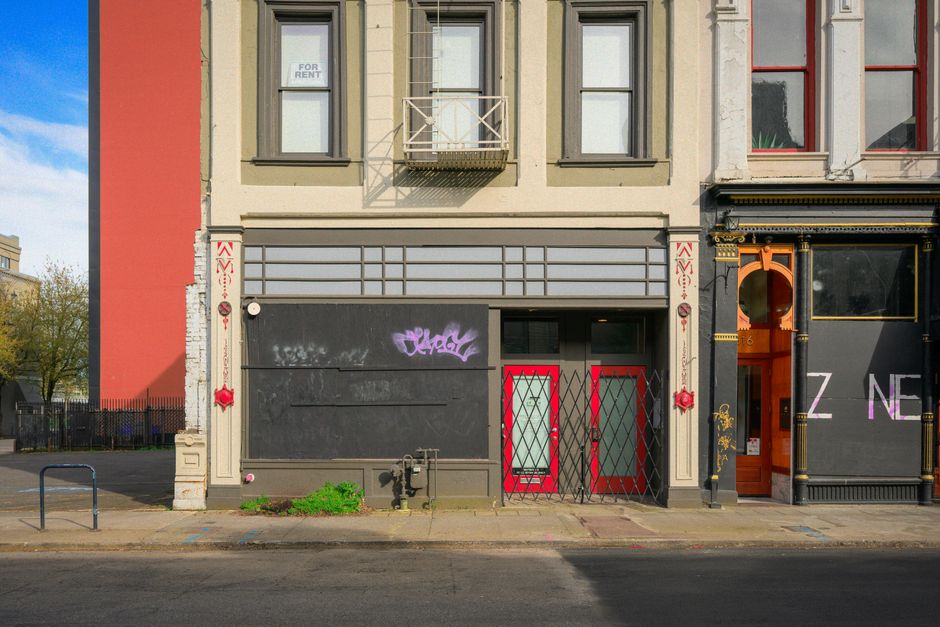
The median asking rent for a two-bedroom apartment in Portland hit $1,847 per month in June 2026, according to data compiled by the Oregon Office of Economic Analysis. To meet the long-standing federal threshold — spending no more than 30 percent of gross income on housing — a Portland household would need to earn at least $73,880 a year. The city's median household income sits closer to $68,400. Do the math, and a majority of Portland renters are already in the red before the month begins.
The timing matters. With mortgage rates still hovering around 6.9 percent on a 30-year fixed loan — down only marginally from the 7.4 percent peak of late 2024 — the traditional escape route out of renting and into ownership remains effectively closed for working- and middle-class Portlanders. On this Fourth of July, while brutal heat forced the cancellation of celebrations from Washington, D.C., to Philadelphia, Portland residents are wrestling with a different kind of pressure: a rental market that has outrun wages and a homeownership ladder with too many broken rungs.
The 30 percent guideline dates to 1969 federal public housing legislation and has been the Housing and Urban Development Department's standard ever since. HUD labels anyone spending more than that share of income on rent as "cost-burdened" and anyone spending more than 50 percent "severely cost-burdened." In Portland's inner eastside neighborhoods — think Buckman, Kerns, and the stretch of Burnside between Southeast 12th and 28th — studios routinely list between $1,250 and $1,450. A renter clearing $45,000 annually, roughly Portland's 25th-percentile individual income, would need to cap their rent at $1,125 to stay within the rule. That price point has almost vanished from the market.
The nonprofit Community Alliance of Tenants, which runs a rental housing hotline out of its Northeast Portland office on Northeast Martin Luther King Jr. Boulevard, fielded more than 4,200 calls in 2025 — a 17 percent jump over the prior year. Their caseworkers report that the majority of callers are already spending between 40 and 55 percent of take-home pay on rent. That is not a budgeting problem. That is a structural one.
Multnomah County's Joint Office of Homeless Services documented 6,297 people experiencing homelessness during its January 2026 point-in-time count, a figure that housing advocates say is directly tethered to the affordability collapse. The county's Ending Homelessness Advisory Council has pushed for additional funding under Oregon's HB 3409, passed in 2025, which earmarked $180 million statewide for affordable unit construction — but new supply will not reach the market before 2027 at the earliest.
The purchase side offers little comfort. The median home sale price in Portland proper reached $489,000 in May 2026, per Redfin's monthly market report. At a 6.9 percent rate with a 10 percent down payment — $48,900 — the principal and interest payment alone lands at roughly $2,913 per month. Add property taxes averaging $5,200 annually in Multnomah County and homeowner's insurance, and the all-in monthly cost clears $3,500. That requires a household income above $140,000 to clear the 30 percent bar. The Portland metro area has relatively few of those households outside of the West Hills and Lake Oswego.
For renters trying to make rational decisions right now, housing counselors at Hacienda CDC — a nonprofit serving largely Latino families in the Cully and Parkrose neighborhoods — recommend stress-testing any rental at 25 percent of gross income rather than 30, building a three-month cushion for unexpected rent increases or job disruption. Portland's rental market has seen landlords raise rents an average of 8.3 percent year-over-year in 2025, outpacing wage growth of around 3.1 percent in the metro area.
The honest answer to the question of how much rent is too much is this: in Portland in the summer of 2026, virtually any rent above $1,100 a month will cost someone earning a median individual wage more than the benchmark allows. The 30 percent rule has not failed — it still accurately diagnoses the problem. The market, and the policy response to it, is what has failed to keep up.

Property
Property
Property

Property
About this article
Published by The Daily Portland
Spread the word
Daily brief
Free, in your inbox before 7am. Weekdays.
The Daily Network — local news across Australia